Showing posts with label Germany. Show all posts

September 28, 2014

Relaxed city life in the old town Stade outside Hamburg, Germany

Relaxed city life in the old town Stade outside Hamburg, Germany

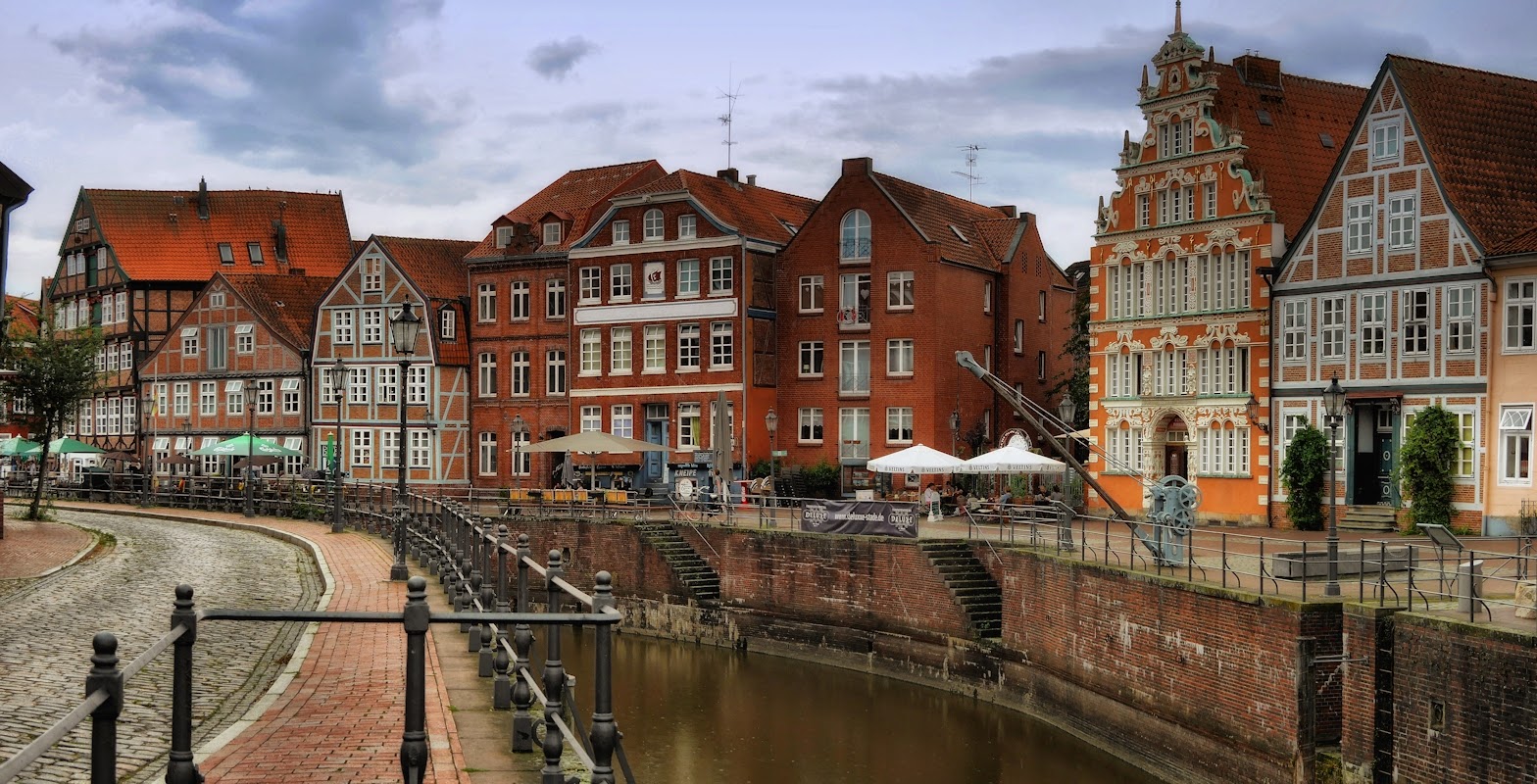
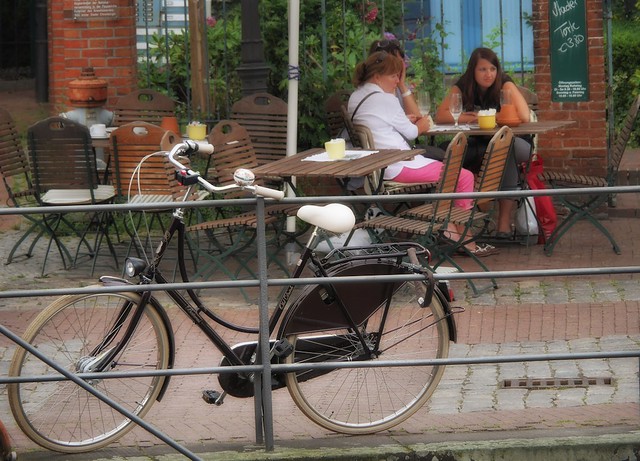
The old town Stade was not bombed under the WWII and remains as it have been through the centurys. Here by a cafe along the canal in the old town.


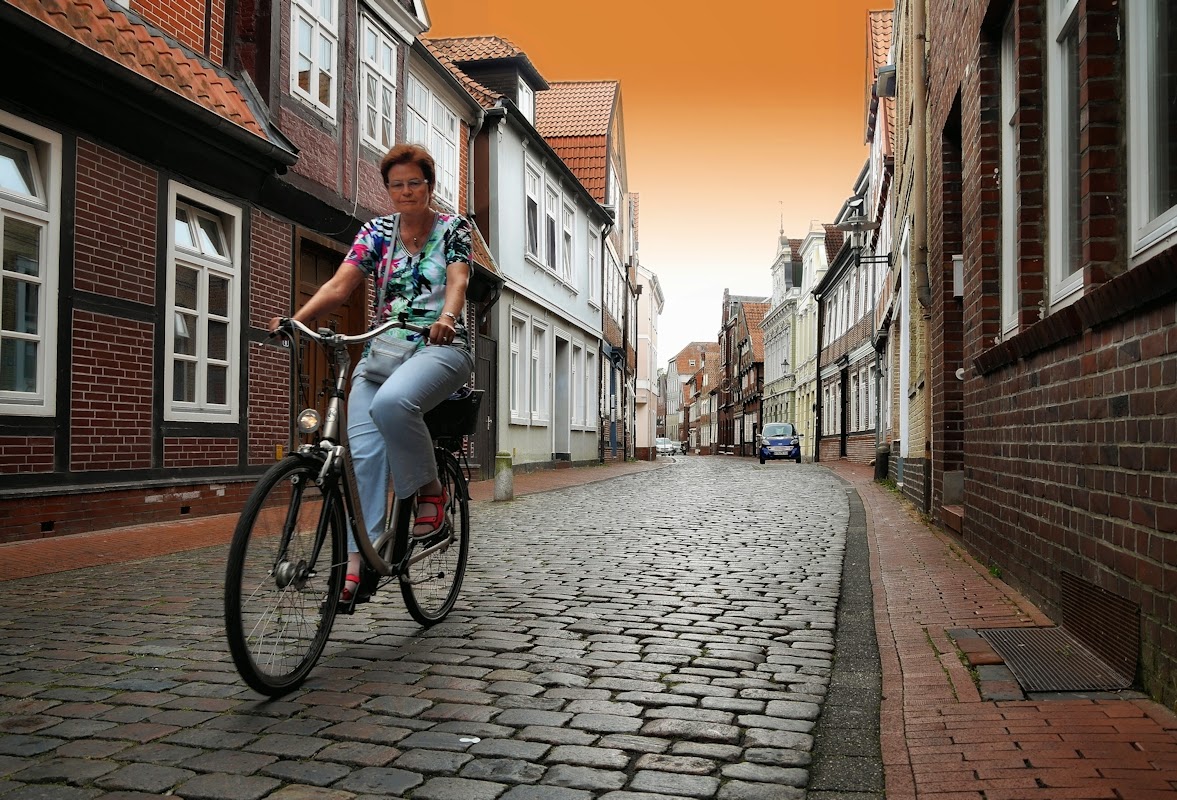
Another biker in the cobbled streets of oldStade


Old town by the canal in Stade - 2 photos stitched

More from the net: 
Stade is a city in Lower Saxony, Germany, and part of the Hamburg Metropolitan Region (Metropolregion Hamburg). The city has a population of around 45,152. Administratively, it is the seat of the Stade district which covers approximately 1,266 sq kms. 

Water plays the most important part in Stade, which becomes evident at the Old Hansa Harbour with its pretty 17th-century houses, where there is the Fish Market with its reconstructed wooden crane and tread mill, framed by the walls of the quay and some splendid half-timbered houses. In the streets of the old town there are monuments of almost all historical architectural styles, ranging from Gothic to post-modern. 

 The first human settlers came to the Stade area in 30,000 BC. The city was founded in 994 and, in 1209, Stade received the "Stadtrecht" (town privileges). In medieval times (from the 1200s to the late 1600s), Stade was a prominent member of the Hanseatic League, but was later eclipsed by Hamburg. Stade was also occupied by Sweden from 1645 to 1712, and some of the buildings built by the Swedes are still in use today. In 1355 and in 1712, Stade suffered a plague epidemic which killed at least 30-40% of the city's population. 

During World War II, Stade remained completely untouched by allied bombings.

September 25, 2014

The old town Stade in Germany

The old town Stade in Germany

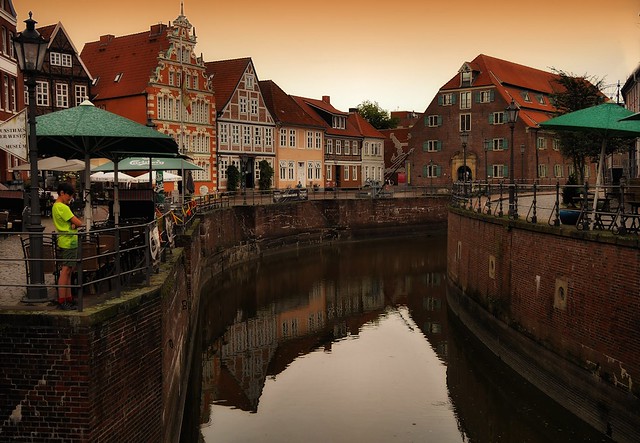
Just some 50km west of Hamburg you will find the  Town Stade - the old town is original from the 17th century as it was never bombed during WW II.

It is a pleasure walking the cobbled streets a fine summer evening.

With the washed out sky I like to use the coffee filter for some effect.

More from the net:
Stade is a city in Lower Saxony, Germany, and part of the Hamburg Metropolitan Region (Metropolregion Hamburg).

The city has a population of around 45,152. Administratively, it is the seat of the Stade district which covers approximately 1,266 sq kms.

Water plays the most important part in Stade, which becomes evident at the Old Hansa Harbour with its pretty 17th-century houses, where there is the Fish Market with its reconstructed wooden crane and tread mill, framed by the walls of the quay and some splendid half-timbered houses. In the streets of the old town there are monuments of almost all historical architectural styles, ranging from Gothic to post-modern.

The first human settlers came to the Stade area in 30,000 BC. The city was founded in 994 and, in 1209, Stade received the "Stadtrecht" (town privileges).

In medieval times (from the 1200s to the late 1600s), Stade was a prominent member of the Hanseatic League, but was later eclipsed by Hamburg. Stade was also occupied by Sweden from 1645 to 1712, and some of the buildings built by the Swedes are still in use today. In 1355 and in 1712, Stade suffered a plague epidemic which killed at least 30-40% of the city's population. During World War II, Stade remained completely untouched by allied bombings.


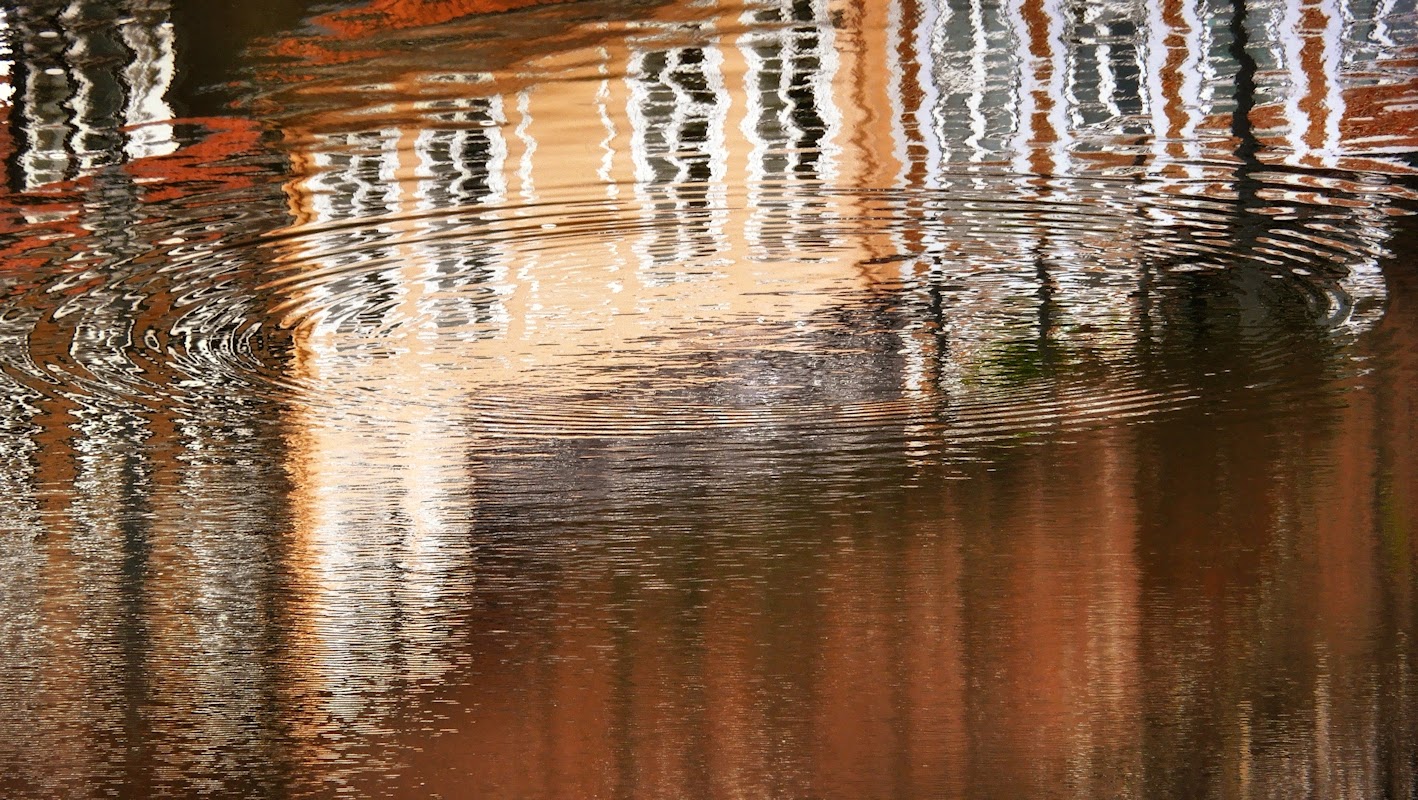
Water reflection in the canal in Stade

September 23, 2014

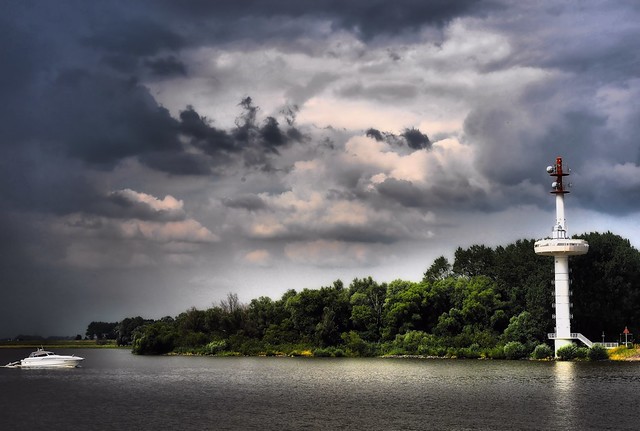
Biking in rain, hail and thunder. Stade, Germany

Biking in rain, hail and thunder, Stade, Germany 

 In July I spent some nights in the small town Stade, just west of Hamburg.

One of the days I went for some biking along the river Elben - crossing it two times before returning to my hotel.

On the last river crossing it was clear that the chance for rain was overwhelming and arriving at "my side" of the river with still 15km back to my hotel I had some serious rain, hail and thunder - or in general a very wet return...

The photo above from the last river crossing as the clouds start to look threatening.

Under as I was seeking shelter at a gas station in the worst showers:


September 10, 2014

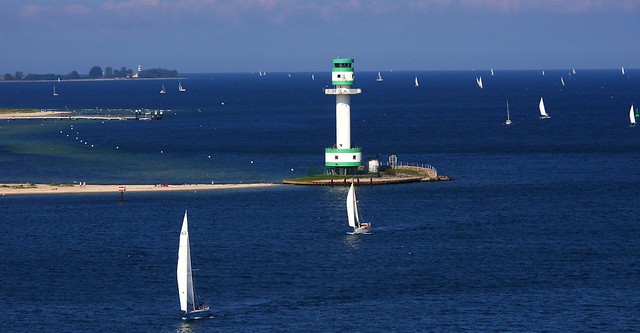
Sailing out from Kiel, Germany - en route to Oslo, Norway

Sailing out from Kiel, Germany - en route to Oslo, Norway

I am onboard the huge car ferry MS Color Fantasy on my last leg coming in my car from South of France en route to Oslo.  Taking this great car ferry saves me from driving the last app. 800 km...

Two ferries leaving at 2pm - one from Kiel, the other from Oslo. This photo is taken as we on such a fine day of September is going out to the more open sea from Kiel.

For more from these super ferries pls. visit my flickr album:
MS Color Fantasy and MS Color Magic

Find below a sharp sailer in full swing in the fine waters of the Kiel seascape


September 2, 2014

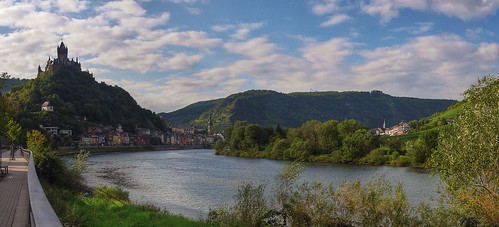
ON TOUR - a day on the road ending in Cochem, Mosel Valley, Germany

 
I started monday on my long tour home in my car - from South of France to Norway is some distance to drive.
 
Today I left France and is tonight in the small and charming village by the banks of the Mosel river: Cochem in Germany. Still many tourists around in this popular village.
 
The main photo is a stitch of 2 - while the closer look is of the significant castle - Shloss Reisburg overlooking the little town
 
 
From the net:
Cochem is a traditional German town with half-timbered houses and an exceptionally scenic location on the Mosel river in Rhineland-Palatinate, Germany. Population about 5,000 and a population of 8700 in a 7 km radius.
Cochem Castle, (Schloss Reichsburg), on its high elevation, overlooks the area. It dominates the town and is an impressive feature.


July 27, 2014

ON TOUR: Biking along the Mozel River by Trier, Germany

 
Going on the east shore first then cross over by a bridge and then going on the west side of this big river in the beautiful Mosel Valley.
 
 
Typical landscape with an old bridge crossing the river in Trier.
 
 
Some days ago I presented some photos from one of the worlds largest car ferries - to day I crossed over Mozel south of the village Konz on what must be one the worlds smallest car ferrries. The trip took some 3 minutes to a priz of € 1,40.
 
A fine day on my tour with some 65km on the bike - meeting houndreds of other bikers on the long tour this great Sunday..


July 26, 2014

ON TOUR - a day in Trier, Mozel Valley, Germany

 
An early start from Stade made me arrive in the early afternoon, around 1.30 PM in Trier.
A warm day with some +26 and what a mass of tourists (like me) wading around.
Here we all meets by the old Porta Nigra - the black gate to Trier.
 
 
After the Romans it was the Christians turn to make some impressive buildings like the oversized Dom in Trier....
 
 
..and in the former Kaizer Palace park people are starting up their BBQ for an afternoon in the shades...
 

July 25, 2014

ON TOUR - biking along Elben, Germany in rain and thunder

 
From Stade outside of Hamburg I had planned to cross Elben and bike both east and west along the big river. Above 2 photos stitched some place outside the small village Blankenese.
 
 
A shuttle ferry takes me back to my side of the big river.
 
 
Even when shortening my original biking plan - I was catched in a thunderstorm app. 15km before I was back to my hotel.
 
 
Still at a day like this I could count up app. 62km on the bike - not that bad.
 
 
Hope to meet some better weather tomorrow when the tour continue to Trier in the Mosel Valley..


July 24, 2014

ON TOUR: An outstanding car ferry from Oslo to Kiel, Germany

There is 2 ferries each day between Oslo to Kiel in Germany. They depart each day at 2 PM to arrive next day at 10 AM - respectively in Oslo and Kiel.
 
I usually book a more ordinaire cabin but was this time upgraded, of unknown reasons, to a full suite.
What e car ferry - photo below from the living room of the suite:
 
 
....what a pleasure..
And after dinner entering the car ferrys theatre for a cowboy show:
 

Then - the day after continue through North of Germany to Stade -an old town west of Hamburg - visiting a town that was never bombed in WWII - even being a close neighboor to Hamburg.
 
 
Cobbled street in Stade
 

January 9, 2014

When the dambusters bounce bombed Møhne Dam in Germany

My interest for the Møhne dam in the photo was raised as we last summer was taking an overnight stop in the North-Rhine Westfalia region to go for a 50km bike tour around the Møhnesee (lake).

Absolute interesting bike tour and coming to the one end of the lake we suddenly could see this old dam in the lake Møhne (the dam constructed around 1910).

Thinking back to the time of WWII it seemed almost strange that this dam should have survived the war. Which was not what the English wanted. In fact they bounce bombed the dam with great success in 1943 - it was partially destroyed and it took a lot of resources to bring it back in working order for the Germans.

This video at Youtube give you some insight with clips from the heroic movie: "The dambusters":

www.youtube.com/watch?v=JUt5ysms3sU

For anyone with an interest for more - here something from the net:

On the night of May 16th, 1943, nineteen Lancaster bombers took off from Scampton in Lincolnshire. They had three primary targets: the Möhne, Eder and Sorpe dams and two secondary ones, the Lister and the Eneppe dams. Of the nineteen planes, five would be held in reserve during the attacks.

Gibson led the first attack. At 00.56 hours, the Möhne Dam was breached and by 01.54 hours so was the Eder Dam. The Sorpe Dam was attacked by planes from the reserve force but, though hit, it held out.

Just how low the Lancasters flew during the attack is shown by the fact that one Lancaster had to turn back as it had hit the sea on the journey to mainland Europe and lost its bomb.

The attack had huge propaganda value and made Gibson a national hero. Of the nineteen Lancasters that took part in the attacks with 133 crew, eight planes were lost with the loss of 56 men; three of these men survived to become prisoners-of-war. Gibson was awarded the Victoria Cross for bringing round his Lancaster to give covering fire to the Lancasters that were following up his attack on the Möhne Dam. 33 others members of 617 squadron were also decorated.

How successful was the raid?

Severe flooding occurred where the Möhne Dam was breached. 1,200 people were killed including nearly 600 forced labourers from Eastern Europe who were housed in a labour camp near Neheim. Six small electricity works were damaged and rail lines passing through the Möhne Valley were disrupted. But industrial production was not affected in the long-term. When the Eder Dam broke, there were similar results. Kassel, an important arms producing town, was reached by the floodwater, but little actual damage was done. Had the Sorpe Dam been breached, then the damage would have been much greater. The potential for a major disaster was recognised by Albert Speer who commented that:

"Ruhr production would have suffered the heaviest possible blow."

In the short and long term, the damage done by 617 squadron was repaired quite quickly. But the most important impact of the raid was that 20,000 men working on the Atlantic Wall had been moved to the Ruhr to carry out repairs to the damaged and breached dams. This work was completed before the rains of the autumn appeared.
 

January 8, 2014

Germany - Crossing Elben with a car ferry

We was going south from Kiel in Germany (coming from Oslo, Norway with the car ferry MS "Color Fantasy").
On the way south we normally go through Hamburg which can be time consuming on a Saturday in July. We then decided to take a swing and go southeast of Hamburg.

As the roads over 2 -3 hrs. become smaller and smaller we understood we had done some navigation mistakes but had to head on anyway. In the end we arrived at a tiny ferry crossing over the river Elben at a place which also was the former border between West and East Germany.
We was by a small village by the name Schnackenburg. It was for sure an idyllic place and not least surprising to explore on a summer afternoon. In the end we arrived at our planned destination surely 1-2 hrs. after schedule.
Looking at the net I was surprised to see that there are still many such small river crossing existing in Germany along their big rivers.
 

September 5, 2011

Hitler's Eagle Nest - Kehlsteinhaus


Some more from the WP:
The Kehlsteinhaus (in English-speaking countries also known as the Eagle's Nest) is a chalet-style structure erected on a subpeak of the Hoher Göll known as the Kehlstein.
It was built as an extension of the Obersalzberg complex erected by the Nazis in the mountains above Berchtesgaden.
The Kehlsteinhaus was intended as a 50th birthday present for Adolf Hitler to serve as a retreat for Hitler and place for him to entertain visiting dignitaries.