Showing posts with label Poland. Show all posts

July 6, 2014

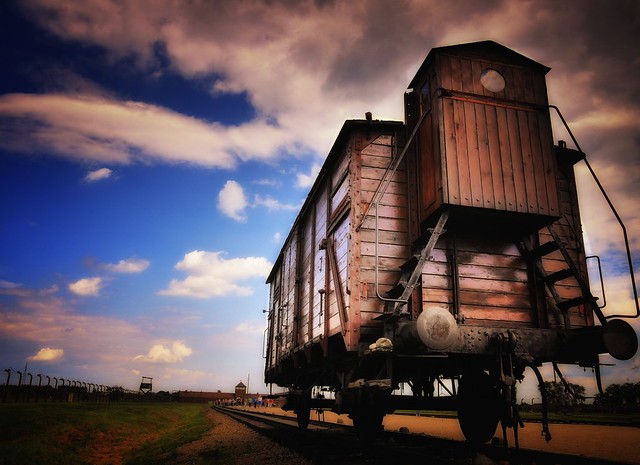
Last boxcar to Auschwitz Birkenau. Oswiecim, Krakow, Poland

Last boxcar to Auschwitz Birkenau.  Oswiecim, Krakow, Poland

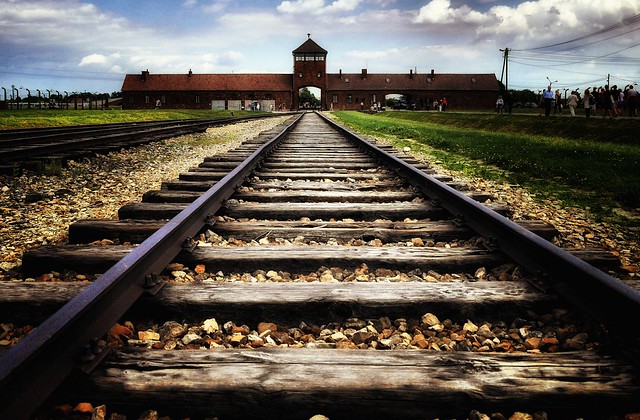
In the photo one of the typical boxcars used to transport jews, gypsies and others through Europe right into the concentration-camp in Auschwitz Birkenau.

After sorting and selecting the new arrivals - the most unfortunate, elderly women and men, children under 14 years of age could be marched no more than 300 meters to their final shower - a dose of the deadly gaz Zyklon-B and the immediate cremation in the fires of Birkenau.
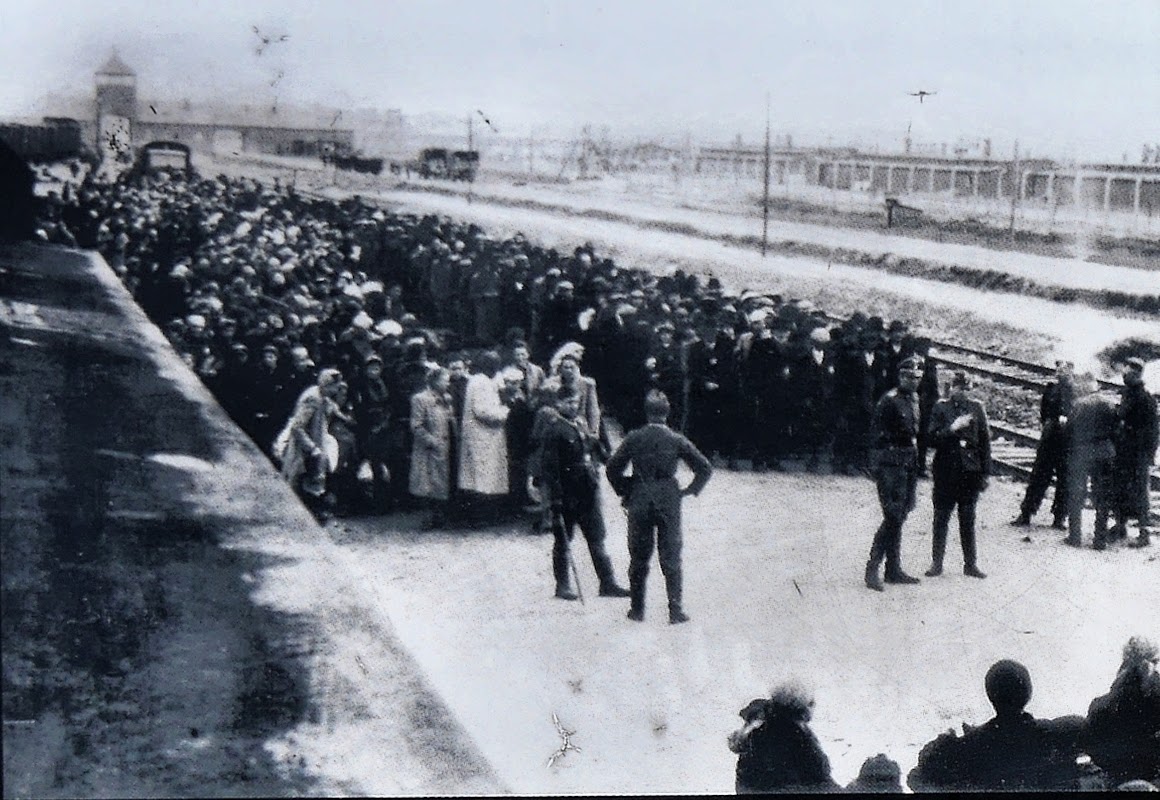

At the same place as the boxcar in the first photo.
70 years ago the first selection is done - dividing men and women and children in two rows
The next step is to sort out who will go in to the camp and who will be taken the 300 meters to their final shower in nerve gas Zyklon B.


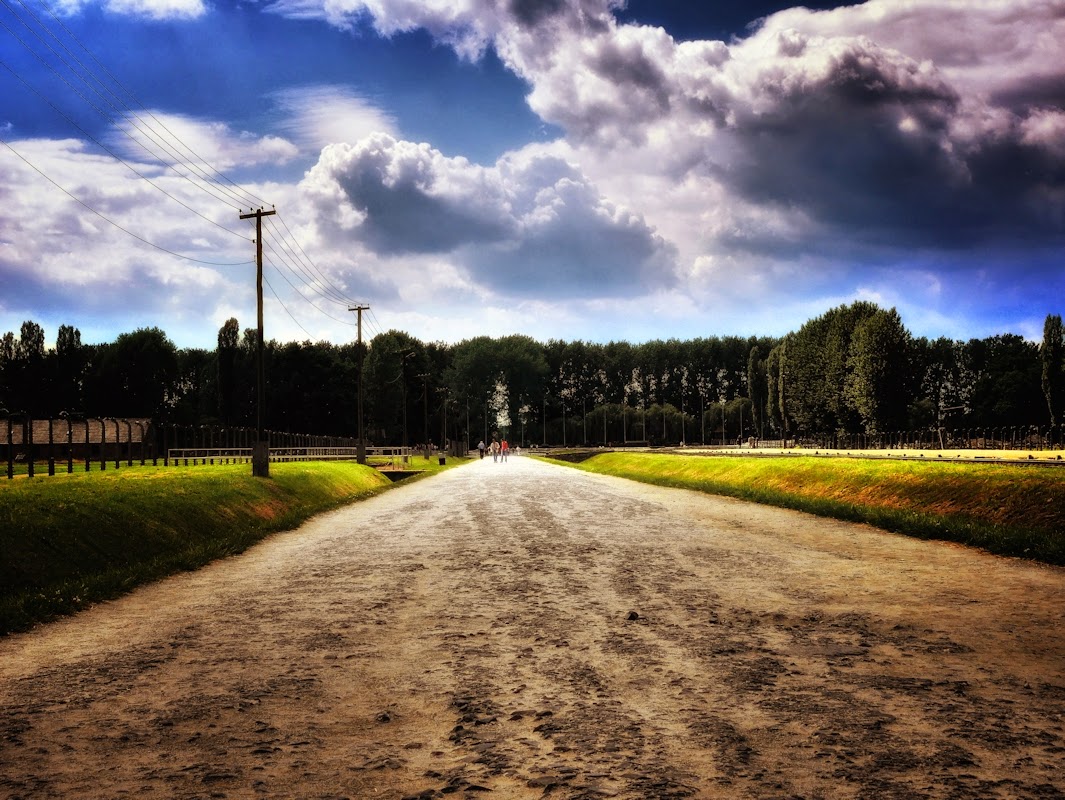
The road from the box car and down to the "showers" and crematorium is only some 300 tragic meters.
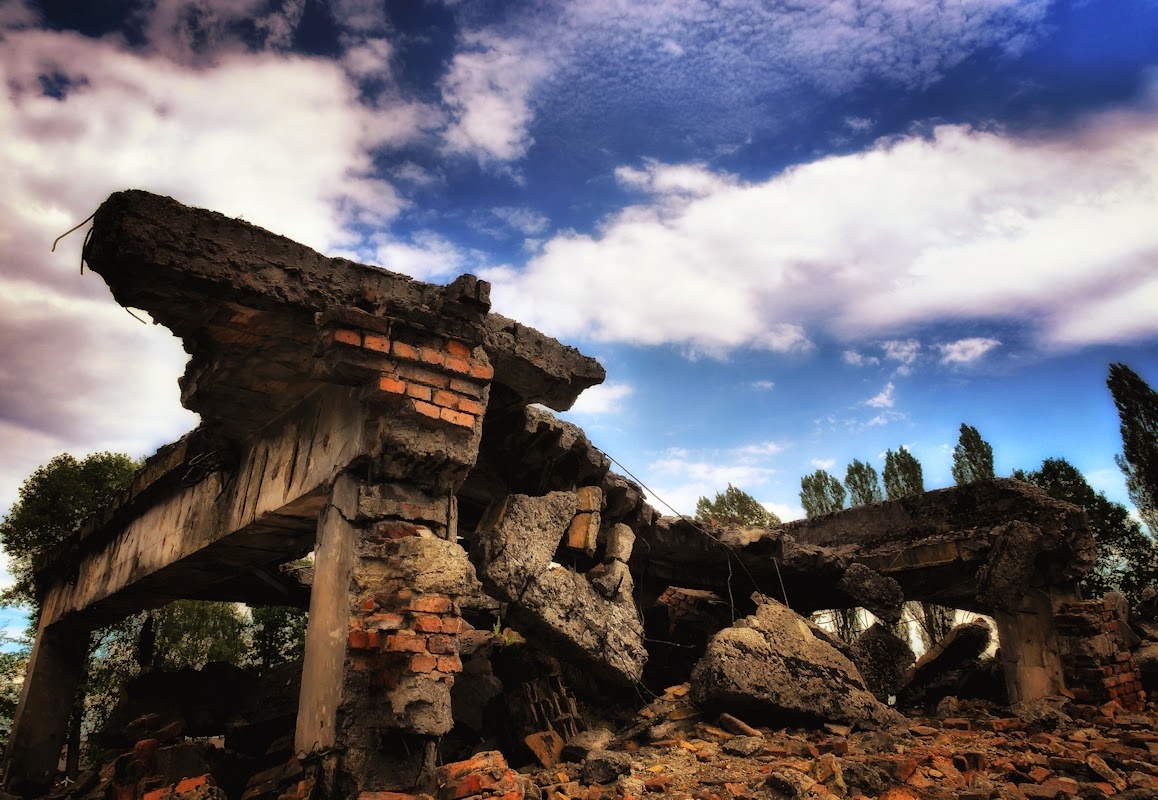
The buildings  was demolished after the war - the memorial place is just down by the trees there
Remains of one of the huge Shower and crematorie complexes in Birkenau


From the net:
Location: Oswiecim, Poland (app. 50 km west of Krakow)
Established: May 26th1940
Liberation: January 27th, 1945, by the Soviet Army.
Estimated number of victims: 2,1 to 2,5 million (This estimated number of death is considered by historians as a strict minimum. The real number of death is unknown but probably much higher, maybe 4 millions)
Sub-camps : 51 

The Auschwitz complex was divided in three major camps: Auschwitz I main camp or Stammlager; Auschwitz II, or Birkenau, established on October 8th, 1941 as a 'Vernichtungslager' (extermination camp); Auschwitz III or Monowitz, established on May 31th, 1942 as an 'Arbeitslager' or work camp; also several sub-camps.

There were up to seven gas chambers using Zyklon-B poison gas and three crematoria. Auschwitz II included a camp for new arrivals and those to be sent on to labor elsewhere; a Gypsy camp; a family camp; a camp for holding and sorting plundered goods and a women's camp. Auschwitz III provided slave labor for a major industrial plant run by I G Farben for producing synthetic rubber (see Blechhammer). Highest number of inmates, including sub-camps: 155,000. The estimated number of deaths: 2.1 to 2.5 million killed in gas chambers, of whom about 2 million were Jews, and Poles, Gypsies and Soviet POWs. About 330,000 deaths from other causes.

In April 1940, Rudolph Höss, who become the first commandant, identified the Silesian town of Oswiecim as a possible site for a concentration camp. The function of the camp was initially to intimidate Poles and prevent resistance to German rule. It was also perceived as a cornerstone of the policy to re-colonize Upper Silesia, which had once been a German region, with 'pure Aryans'. On April 27th, Himmler ordered construction of the camp.

Himmler visited Auschwitz in March 1941 and commanded its enlargement to hold 30,000 prisoners. Himmler also ordered the construction of a second camp for 100,000 inmates on the site of the village of Brzezinka (Birkenau), roughly 4 km from the main camp. This massive camp was intended to be filled with captured Russian POWs who would provide the slave labor to build the SS 'utopia' in Upper Silesia. The chemical giant I G Farben expressed an interest in utilizing this labor force, too. Extensive construction work began in October 1941, under terrible conditions and with massive loss of life. About 10,000 Russian POWs died in the process.

The Death Factory... (1945)
The main camp population grew from 18,000 in December 1942 to 30,000 in March 1943. In July or August 1941, Himmler briefed Höss about the 'Final Solution'. On September 3th, 1941, Soviet POWs at the Auschwitz main camp were used in trials of the poison gas Zyklon-B. This poison gas was produced by the German company "Degesch" (Deutsche Gesellschaft zur Schädlingsbekämpfung). The were gassed in underground cells in Block 11. After this trial, a gas chamber was rigged-up just outside the main camp and in February 1942, two temporary gas chambers opened at Birkenau. The crematories were built by the German company "Topf & son" located at Erfurt.


...a system operated later at Birkenau in 1942-43, except that for the majority the 'showers' proved to be gas chambers. Only about 10 percent of Jewish transports were registered, disinfected, shaven and showered in the 'central sauna' before being assigned barracks. In May 1944, a spur line was built right into the camp to accelerate and simplify the handling of the tens of thousands of Hungarian and other Jews deported in the spring and summer of 1944.


------------------------------------------------------------------
THIS TOUR SPONSORED BY CRACOWDAYS
------------------------------------------------------------------

The fine boutique hotel and B&B - Crakowdays 
within a short walk from the main square in Krakow

July 3, 2014

Final destination: Auschwitz Birkenau. Oswiecim, Krakow, Poland


Final destination: Auschwitz Birkenau.  Oswiecim, Krakow, Poland

The Nazi ambition to free Europe for Jews, Gypsis and other non Arians during WWII was in it's prime time in May 1944 when the new logistic advancement in these camps was having the railway lines ending right inside the wired gates of Birkenau.

After sorting and selecting the new arrivals - the most unfortunate, elderly women, men and children under 14 years of age could be marched no more than 300 meters to their final douche - a dose of the deadly gaz Zyklon-B and the immediate cremation in the fires of Birkenau. While the "lucky" one's could look forward to an average life span of 3 months before ending their life in the same way.

It makes your hair raise bending down between the rails on this place of ultimate terror, for making your photo and memorial from visiting this place, even on a sunny day 70 years later.


Barracks in the Concentration-camp Birkenau in Poland

Inside a barrack in Birkenau.
From 180 and up to 1000 prisoners pr. barrack
Bed in 3 etages
6 men pr. bed . 2 blankets pr.bed
Outside in the winter up to -40 C/F

From the net:
Location: Oswiecim, Poland (app. 50 km west of Krakow)
Established: May 26th1940
Liberation: January 27th, 1945, by the Soviet Army.
Estimated number of victims: 2,1 to 2,5 million (This estimated number of death is considered by historians as a strict minimum. The real number of death is unknown but probably much higher, maybe 4 millions)
Sub-camps : 51

The Auschwitz complex was divided in three major camps: Auschwitz I main camp or Stammlager; Auschwitz II, or Birkenau, established on October 8th, 1941 as a 'Vernichtungslager' (extermination camp); Auschwitz III or Monowitz, established on May 31th, 1942 as an 'Arbeitslager' or work camp; also several sub-camps.

There were up to seven gas chambers using Zyklon-B poison gas and three crematoria. Auschwitz II included a camp for new arrivals and those to be sent on to labor elsewhere; a Gypsy camp; a family camp; a camp for holding and sorting plundered goods and a women's camp. Auschwitz III provided slave labor for a major industrial plant run by I G Farben for producing synthetic rubber (see Blechhammer). Highest number of inmates, including sub-camps: 155,000. The estimated number of deaths: 2.1 to 2.5 million killed in gas chambers, of whom about 2 million were Jews, and Poles, Gypsies and Soviet POWs. About 330,000 deaths from other causes.

In April 1940, Rudolph Höss, who become the first commandant, identified the Silesian town of Oswiecim as a possible site for a concentration camp. The function of the camp was initially to intimidate Poles and prevent resistance to German rule. It was also perceived as a cornerstone of the policy to re-colonize Upper Silesia, which had once been a German region, with 'pure Aryans'. On April 27th, Himmler ordered construction of the camp.

Himmler visited Auschwitz in March 1941 and commanded its enlargement to hold 30,000 prisoners. Himmler also ordered the construction of a second camp for 100,000 inmates on the site of the village of Brzezinka (Birkenau), roughly 4 km from the main camp. This massive camp was intended to be filled with captured Russian POWs who would provide the slave labor to build the SS 'utopia' in Upper Silesia. The chemical giant I G Farben expressed an interest in utilizing this labor force, too. Extensive construction work began in October 1941, under terrible conditions and with massive loss of life. About 10,000 Russian POWs died in the process.

The Death Factory... (1945)
The main camp population grew from 18,000 in December 1942 to 30,000 in March 1943. In July or August 1941, Himmler briefed Höss about the 'Final Solution'. On September 3th, 1941, Soviet POWs at the Auschwitz main camp were used in trials of the poison gas Zyklon-B. This poison gas was produced by the German company "Degesch" (Deutsche Gesellschaft zur Schädlingsbekämpfung). The were gassed in underground cells in Block 11. After this trial, a gas chamber was rigged-up just outside the main camp and in February 1942, two temporary gas chambers opened at Birkenau. The crematories were built by the German company "Topf & son" located at Erfurt.

...a system operated later at Birkenau in 1942-43, except that for the majority the 'showers' proved to be gas chambers. Only about 10 percent of Jewish transports were registered, disinfected, shaven and showered in the 'central sauna' before being assigned barracks. In May 1944, a spur line was built right into the camp to accelerate and simplify the handling of the tens of thousands of Hungarian and other Jews deported in the spring and summer of 1944.</>


-------------------------------------------------------------------
THIS TOUR SPONSORED BY CRACOWDAYS
-------------------------------------------------------------------

Photo: Window flowers at the Boutique Hotel, B&B

July 2, 2014

Inside Schindlers Metalwarefabriken in Krakow, Poland


Inside Schindlers Metalwarefabriken in Krakow, Poland

Krakow was not bombed during the WWII - so after the war the famous Metalwarefabriken who was owned by Oscar Schindler is still there. Made even more famous after the film made by Steven Spielberger.

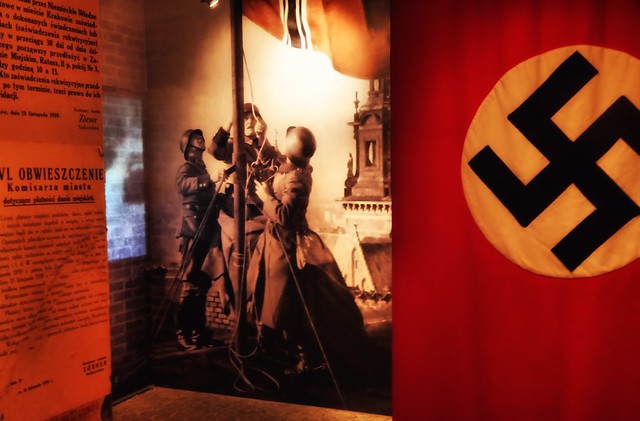
Today the office part of the plant is made to a museum telling the story of Krakow before, under and after the WWII - a must to visit when in Krakow.

Photo above from the time of the Nazis in Krakow as displayed in the present museum


Office and display of some products produced in the Metalwarefabriken


The office building of the former Schindler Metalwarefabriken - today a wartime museum


To the left:
The madam tries out a small prisoners cell in the present war time museum at Schindlers former Metalwarefabriken


To the left:
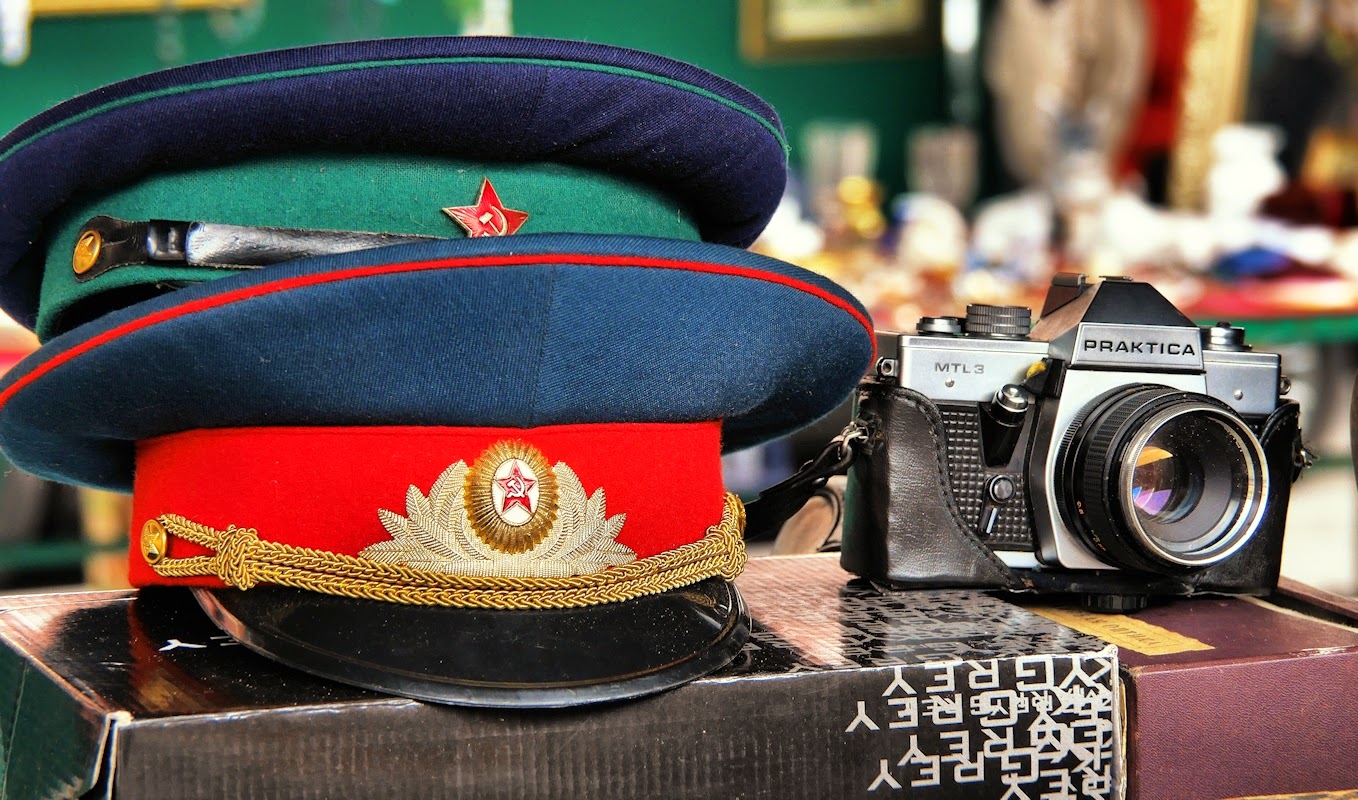
War time uniform cap - detail in the museum


From the net:
Oscar Schindler had many more Jewish slaves in his factory than he ever needed and spent millions on protecting his plans from the Germans.
He looked after his slaves till the end of the war and no Jewish slave was ever killed in his factory. At the end of the war, he emerged broke and had nowhere to go, but he had saved over 1200 lives. Generations of Jews live today because of him.Oscar Schindler was a poor German businessman looking for a way to make a living. He had a vision that would bring him fame and riches. He left his wife, town and everything he owned behind and headed to Krakow, Poland. There he organised where and when high ranking officers and colonels of the German and Nazi armies would be at certain restaurants and pubs. He would buy them drinks and expensive cigarettes and, in return, they would have a conversation. After a while, they would become friends. Oscar Schindler learned of all the German plans for the war and of the many assaults against the Jews.
He borrowed some money from a new friend to buy a factory just outside of town. With the money, he opened the factory up and started producing goods. He did not have to pay workers, as the German officers gave him Jewish prisoners of war from the "ghetto" and isolation camps to work in his factory for free. Oscar Schindler became one of the wealthiest men in Krakow and was able to pay off his loan.

Although Oscar Schindler supported the Nazis and the war, he saw what was happening to the Jews and knew it wasn't right. They were getting murdered by the thousands and were treated unjustly because of their heritage. He put his life on the line to save generations and, as time went by, he forgot about wealth and riches and became devoted to saving the lives of Jews.


------------------------------------------------
This tour sponsored by Crakowdays
- Boutique Hotel, B&B in Krakow
-------------------------------------------------

June 30, 2014

The empty chairs by the former Jewish Ghetto in Krakow, Poland

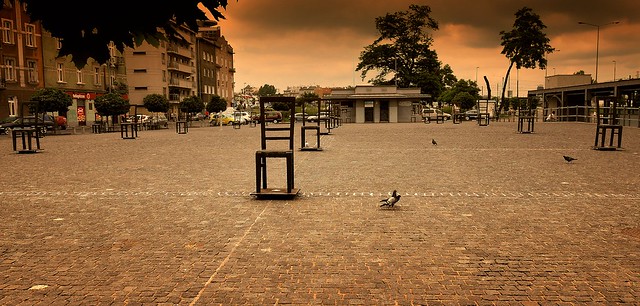
The empty chairs by the former Jewish Ghetto in Krakow, Poland

The empty chairs of steel in  Plac Bohaterow Getta, Krakow, Poland

A sad memory in honor of all those lives from Krakow murdered by the Nazis under WWII

From the net:
A memorial monument for the murdered Jews of the Podgorze Ghetto in Krakow was inaugurated on 8 December 2005. The winning project by Krakow architects Piotr Lewicki and Kazimierz Łatak included 33 illuminated chairs (1.4 m high) in the square and 37 smaller chairs (1.2 m high) standing on the edge of the square and at the tram stops. They called their project "Nowy Plac Zgody" which means "New Concordia Square".
The fundamental symbolical idea behind the project is a stylistic representation of all the old furniture being thrown out onto the so-called Umschlagplatz at the Podgorze Ghetto, when the inhabitants of the ghetto had finally been assembled by the German SS in so-called Aktionen to be sent to death (mainly to Belzec). 


A part of the original ghetto walls from WWII in Krakow


------------------------------------------------------------------
This tour sponsored by: CRACOWDAYS
Higly recommended Boutique Hotel, B&B in Central Krakow
-------------------------------------------------------------------

June 28, 2014

Belgian Frites and a wall painting in the Jewish quarter of Krakow, Poland

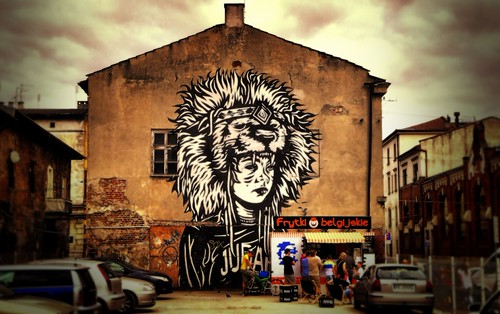
Belgian Frites and a wall paint in the Jewish quarter of Krakow, Poland

Kazimierz the old Jewish quarter in Krakow looks partially a bit worn out and for me this wall painting with the sales point for Belgian Frites is in many ways a typical detail of the place.


Florist in Kazimierz


Items at the antique market in the Jewish Kazimierz


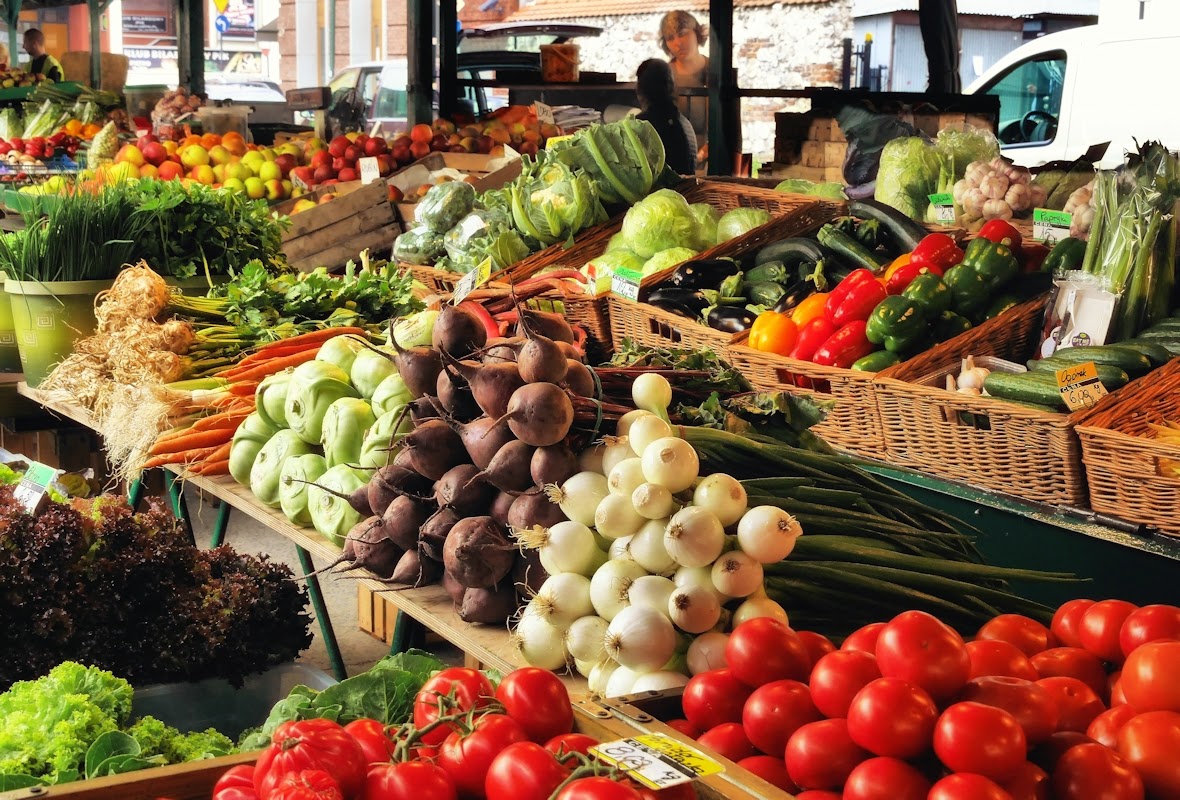
Vegetable market in the Jewish Kazimierz


To the left:
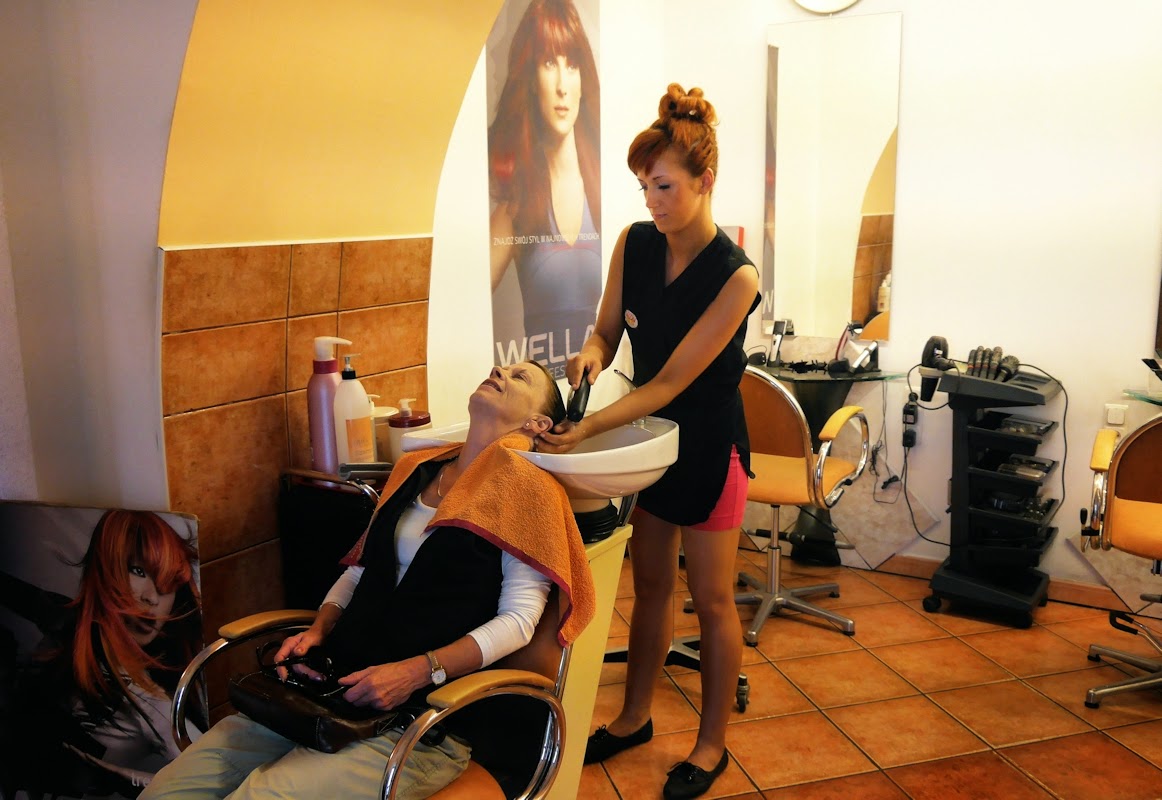
The madam have a hair wash with the local hairdresser in the Jewish Kazimierz, Krakow


From the net:
Kazimierz – the district south of the Old Town between the Wisła River and ul. Dietla (where a tributary of the Wisła once flowed) was the centre of Jewish life in Kraków for over 500 years, before it was systematically destroyed during World War II.

In the communist era it became one of Kraków’s dodgiest districts while gradually falling into disrepair. Rediscovered in the 1990s, thanks to the fall of the regime and worldwide exposure through the lens of Steven Spielberg,

Well-known for its associations with Schindler and Spielberg, traces of Kazimierz’s Jewish history have not only survived, but literally abound in the form of the district’s numerous synagogues and Jewish cemeteries.


-------------------------------------------------------------------
THIS TOUR SPONSORED BY CRACOWDAYS 
-------------------------------------------------------------------

Magdalena (left) and Janusz Galka welcome their guests to their well managed small Boutique Hotell and B&B in the central part of Krakow.

Ranked as one of the best overnight stays in Krakow, by Tripadvisor. Magdalena, Janusz and their staff is  well known for their extended and personal service.

Be welcome to use the link above to learn more of this outstanding place for your stay in Krakow.

June 25, 2014

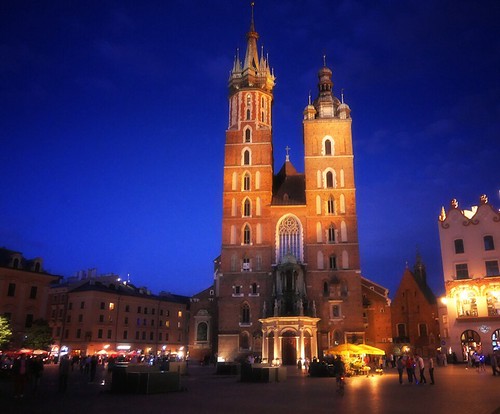
Blue hour by St. Marys Basilica at the Main Square, Krakow, Poland

 
Night shots without a tripod is not my first preference. But with a little help from a high ISO you may have a decent result....

From the net:
St. Mary's Basilica
Church of Our Lady Assumed into Heaven

Completed1347
Church of Our Lady Assumed into Heaven (also known as St. Mary's Church; Polish: Kościół Wniebowzięcia Najświętszej Maryi Panny (Kościół Mariacki)) is a Brick Gothic church re-built in the 14th century (originally built in the early 13th century), adjacent to the Main Market Square in Kraków, Poland. Standing 80 m (262 ft) tall, it is particularly famous for its wooden altarpiece carved by Veit Stoss (Wit Stwosz).

On every hour, a trumpet signal—called the Hejnał mariacki—is played from the top of the taller of St. Mary's two towers. The plaintive tune breaks off in mid-stream, to commemorate the famous 13th century trumpeter, who was shot in the throat while sounding the alarm before the Mongol attack on the city. The noon-time hejnał is heard across Poland and abroad broadcast live by the Polish national Radio 1 Station.

St. Mary's Basilica also served as an architectural model for many of the churches that were built by the Polish diaspora abroad, particularly those like St. Michael's and St. John Cantius in Chicago, designed in the so-called Polish Cathedral style.

The church is familiar to many English-speaking readers from the 1929 book The Trumpeter of Krakow by Eric P. Kelly.


-----------------------------------------------------------------------
THIS TOUR SPONSORED BY CRACOWDAYS.COM
-----------------------------------------------------------------------

Window flowers at a superior room at Cracowdays
 

June 21, 2014

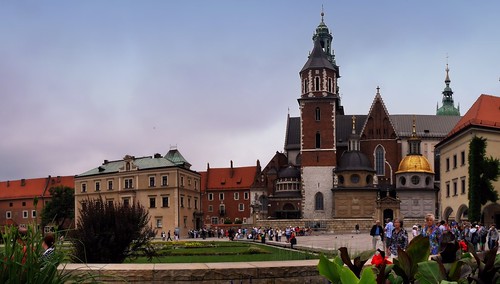
Wawel - the hill of fame in Krakow, Poland


Wawel - The Hill of Fame. The photo displays the Wawel Cathedral - 2 photos stitched.

From the net:
Wawel Hill in Krakow, the mecca of every Pole and a must for foreign tourists, is a microcosm of Polish history and culture. From the 11th century on Poland's monarchs took up their residence here in the Royal Castle. And they were both crowned and buried here, in the Wawel Cathedral where later on Polish national heroes have also been laid to rest since the 19th century. The place not only overflows with priceless art treasures, architectural beauties, relics of the past and curiosities. It is also full of glory, magic, history and fable.


This tour sponsored by cracowdays.com

In the photo the breakfast room


June 19, 2014

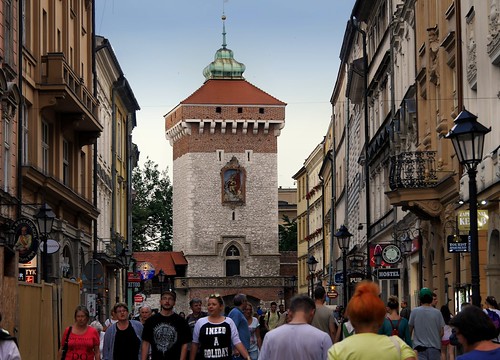
St. Florians gate - the old historic entrance to Krakow, Poland

 
The old, historic entrance to Krakow, Poland

From our walk in the Krakow old town we also had this photo of the old St. Florian's gate which is topped by the Furriers' tower. This gateway is the historic entrance to the city, and the starting point of processions that hail back to ancient times. This route, which leads down Florianska street and on to Wawel, is known as the Royal Way.

From the net
St. Florian's Gate
By 1500 Cracow was not only one of the richest cities in Europe but also one of the best fortified. The Old Town was ringed by a great wall, and this was punctuated by forty-seven towers and encircled by a moat. Immediately beyond this lay a further line of defense, comprising of a second wall and yet another moat. This outer wall was pierced by two barbicans, one of which, a splendid edifice, still survives. Owing to these formidable defenses, marauding armies were faced with a great dilemma. Much as they might wave the dismembered heads of those unlucky souls that had been caught beyond the city limits, more often than not they could not traverse the wall. Indeed, for a period of about two hundred years, Cracow was unbroken by foreign invasions.


Street Vendor in Krakow - maybe not a good day for the business?

Street leading to the big main square - In the back the towers of St Marys basilica


Our tour to Krakow was sponsored by

To the left a superior room at our Boutique Hotel

June 18, 2014

Coffee filter for the big main square in Krakow, Poland


On our day walking around in Krakow we was "blessed" with a complete washed out sky - so instead of the dull white I added here a coffee filter for a more interesting result.

From the net
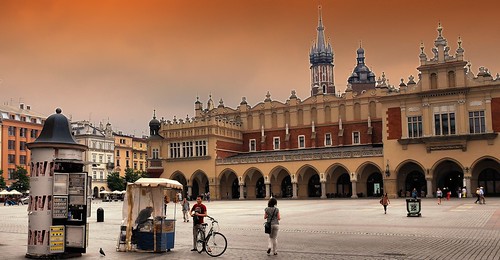
The main square of the Old Town of Kraków, Lesser Poland, is the principal urban space located at the center of the city.

It dates back to the 13th century, and at roughly 40,000 m² (430,000 ft²) is the largest medieval town square in Europe.

The Project for Public Spaces (PPS) lists the square as the best public space in Europe due to its lively street life.
The main square is a rectangular space surrounded by historic townhouses (kamienice), palaces and churches.

The center of the square is dominated by the Cloth Hall (Sukiennice), rebuilt in 1555 in the Renaissance style, topped by a beautiful attic or Polish parapet decorated with carved masks.

On one side of the cloth hall is the Town Hall Tower (Wieża ratuszowa), on the other the 10th century Church of St. Adalbert and 1898 Adam Mickiewicz Monument. Rising above the square are the Gothic towers of St. Mary's Basilica (Kościół Mariacki).


This tour sponsored by: Cracowdays (www.cracowdays.com )

To the left - beautiful orchidee in our hotel room window.
 

June 17, 2014

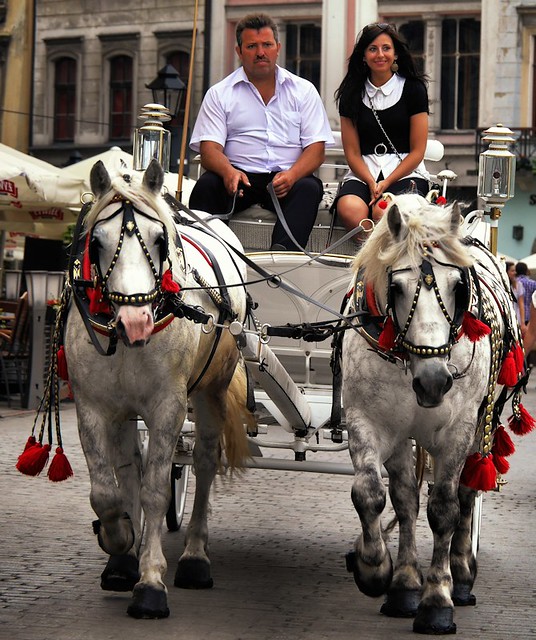
The horse carriages and more in Krakow, Poland


A popular way for getting around in the old town. Captured here as a carriage returns to the main square.
(Seems like the pair up there was not on the same smiling course..... :-)

From the net:
The most romantic way to tour Kraków is in one of the many horse-drawn carriages, which line up at the northern end of Rynek Główny and on ul Grodzka opposite the Church of St Andrew. You decide which route you want to take, or leave it up to the driver to take you for a trot round the sights of the Old Town or even down to Kazimierz.

Some musicians on their way in their busy Krakow moring

How is it to stand in a window making Krakow chocolate?

-----------------------------------------------------------------------------
Our tour to Krakow was sponsored by cracowdays.com
-----------------------------------------------------------------------------
 

June 16, 2014

The main square in Krakow, Poland


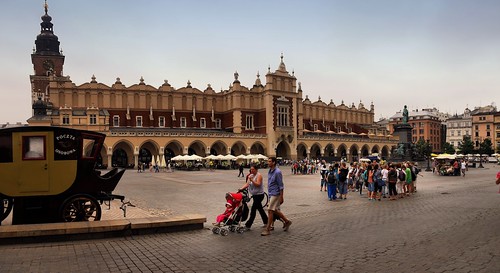
The main square in Krakow presented as a stitch of 2 photos.

From the net
The main square of the Old Town of Kraków, Lesser Poland, is the principal urban space located at the center of the city.

It dates back to the 13th century, and at roughly 40,000 m² (430,000 ft²) is the largest medieval town square in Europe.

The Project for Public Spaces (PPS) lists the square as the best public space in Europe due to its lively street life.
The main square is a rectangular space surrounded by historic townhouses (kamienice), palaces and churches.

The center of the square is dominated by the Cloth Hall (Sukiennice), rebuilt in 1555 in the Renaissance style, topped by a beautiful attic or Polish parapet decorated with carved masks.

On one side of the cloth hall is the Town Hall Tower (Wieża ratuszowa), on the other the 10th century Church of St. Adalbert and 1898 Adam Mickiewicz Monument. Rising above the square are the Gothic towers of St. Mary's Basilica (Kościół Mariacki).


June 15, 2014

Sightseeing for the small folks in Krakow, Poland


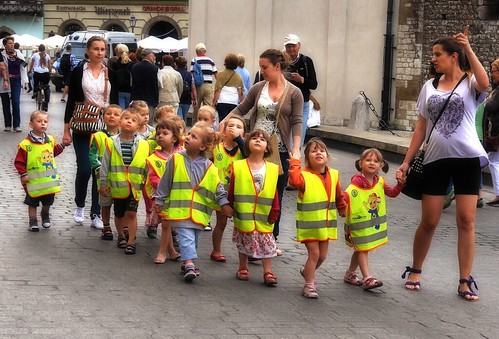
The small folks was out for some sightseeing at the big market place in Krakow - and as the leader point outs something of interest high up at a building the small folks all take a closer look - that is with the exception of the one in the back who seems more engaged in own thoughts.
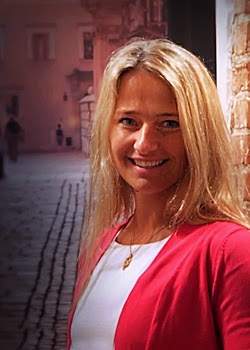
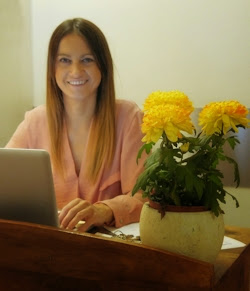
Magdalena Trybus at Cracowdays

We are just back from a few days in this fine, cultural, old city in the South of Poland. The initiative came as an invitation from Magadalena (photo at left) at the small, well-managed Boutique-hotel "Cracowdays" (cracowdays.com) - centrally situated in the city.

Starting today there will be some posts from Krakow and a photoset/album from Krakow and later from Auschwitz-Birkenau, the concentration camp from WWII.
You are welcome back in the coming days for a few impressions from this tour.


From the net:
Today’s Krakow is a vibrant city of a million, proud of its long and glorious history, rich heritage, and architectural beauties. For many centuries the capital of the Polish kingdom, nowadays it remains the southern Poland’s metropolis and the seat of the Malopolska provincial government. Important as a crucial center of business, culture, and education, Krakow is also famous for its myriad restaurants and nightspots.
April 18, 2014

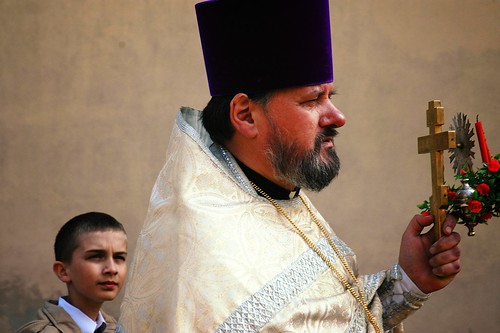
Poland, Podlaskie - One day to be like you....

"One day to be like you.."

Easter procession in an Orthodox Church in a village in the Podlaskie region of Poland.

Photo from some years back when visiting this interesting region with some photo friends.